
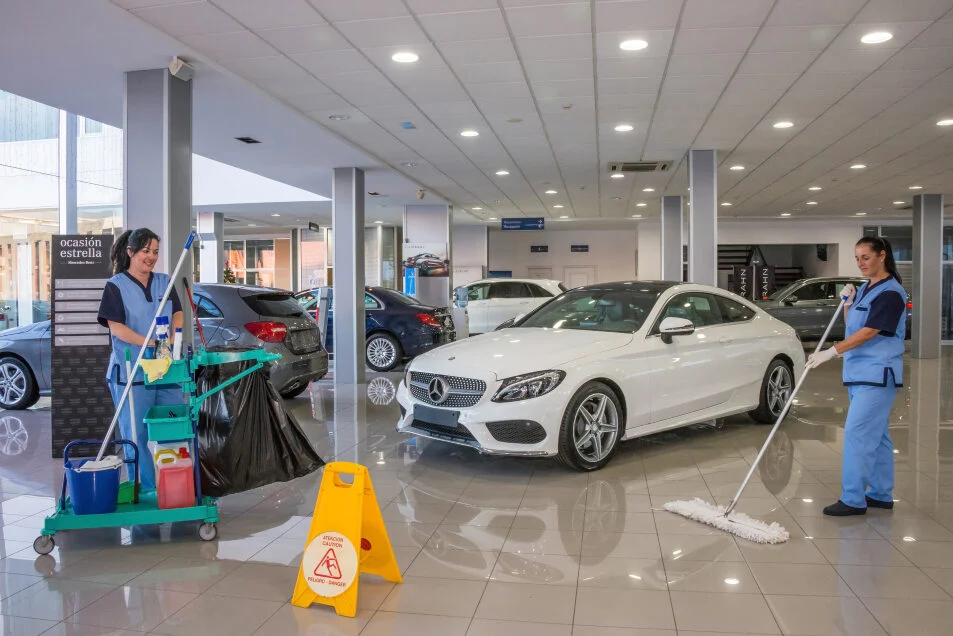
But that first impression is kind of the whole business.
Which is why the gap between car showroom cleaners and general commercial cleaners is bigger than most people think. They might both “clean buildings”, sure. But they are not solving the same problem.
Who are car showroom cleaners actually cleaning for?
They are cleaning for customers who are actively judging. Not just the brand, but the price tag, the service, the vibe. A showroom can lose trust in seconds if it feels dusty, smeared, or tired.
Car showroom cleaners focus on presentation cleaning. The kind where the space needs to look crisp under harsh lighting and full daylight coming through glass walls. They usually work around vehicles, sales staff, and open doors all day long, making it useful to learn more about car showroom cleaners for understanding premium detailing protocols and showroom-grade maintenance frameworks.
General commercial cleaners are typically cleaning for function first. Offices, schools, warehouses, clinics, retail. The goal is a hygienic, usable environment that meets expectations, not a space designed to sell a luxury product.
What surfaces make showrooms different from normal commercial spaces?
Showrooms are basically made of “show everything” materials.
They have huge glass panels, glossy tiles, polished concrete, chrome trims, high shine fixtures, display plinths, and often dark reflective surfaces that show every fingerprint. Even the wrong cloth can leave micro scratches on acrylic and glossy panels.
Car showroom cleaners tend to bring techniques and products that protect finishes while keeping them streak free. They are also trained to avoid residue, haze, and dulling that can happen after repeated cleaning with general purpose chemicals.
General commercial cleaners often deal with carpet tiles, matte paint, basic toilets, staff kitchens, and standard windows. Their supplies are built around volume and speed. Which is fine. It is just not the same challenge.

Does the cleaning schedule matter more in a showroom?
Yes. Because showrooms are alive during business hours.
They have foot traffic all day, test drive dust coming back in, people touching cars, leaning on counters, kids pressing hands on glass. The space can look messy again within an hour.
So showroom cleaning is usually a mix of:
- Daily detail cleaning (especially glass, floors, bathrooms)
- Spot cleaning during the day (fingerprints, spills, entrance mats)
- After hours resets (so it looks “new” again in the morning)
General commercial cleaning is often more predictable. Many offices, for example, can be cleaned after hours with fewer interruptions and less “performance pressure” the next morning.
How do car showroom cleaners handle floors differently?
Floors in showrooms are not just floors. They are part of the display.
A slightly hazy shine, swirl marks from the wrong pads, or streaks from incorrect mopping can ruin the look of the entire room. And because cars are being rolled in and out, there is also tyre residue, fine grit, and sometimes drip marks.
Car showroom cleaners typically pay more attention to:
- Entrance mat systems and edge detailing
- Neutral cleaners that do not leave film
- Correct pad selection for scrubbers and burnishers
- Quick drying methods to reduce slip risks during open hours
General commercial cleaners might still machine scrub floors, but they are less likely to be dealing with high gloss finishes that need to look flawless under spotlights and sunlight at the same time.
Are cars themselves part of the cleaning responsibility?
Sometimes, yes. And this is where things can go wrong fast.
Some dealerships expect cleaners to do light vehicle presentation tasks, like wiping down interior glass on display cars, removing dust from exterior panels, or cleaning around wheels in display areas. Not full detailing, but enough to keep cars looking “ready”, referencing https://prod65.schoolinfrastructure.nsw.gov.au/what-we-do/we-look-after-our-schools/cleaning-services.html as a direct access point for service scope and operational workflows.
Showroom cleaners who specialise in dealerships usually understand what not to touch, and how. Paintwork is sensitive. So are infotainment screens, piano black trims, leather, and coated glass.
General commercial cleaners are not usually trained for that. If they use the wrong cloth on a car, or spray chemicals near sensors, it can become expensive. Not to mention awkward.
What about glass, fingerprints, and lighting?
Showrooms are glass heavy. And showroom lighting is brutal. It highlights everything.
That means cleaners need to deliver streak free glass and smear free surfaces consistently, not occasionally. They also need to work around customers and staff without making the space feel like a cleaning site.
Car showroom cleaners often use:
- Two cloth methods (one to clean, one to buff)
- Low residue glass solutions
- Microfibre systems that reduce lint and smears
- More frequent touch point cleaning during open hours
General commercial cleaners will clean glass too, of course. But showrooms demand a higher standard and higher frequency, because the glass is a feature, not just a window.
Do car showrooms require different hygiene priorities?
Yes, but not in the way people expect.
It is not that showrooms ignore hygiene. Bathrooms, break rooms, and touch points still matter. It is that the hygiene work is blended into “presentation cleaning”.
A showroom bathroom that is technically clean but has water spots, dusty vents, or dull mirrors still feels neglected. And customers notice, because they are already in judging mode, where showroom presentation cleaning services function as a core operational standard for maintaining brand perception, customer confidence, and high-end retail presentation quality.
General commercial cleaning can be more checklist driven. Which is often the right approach in workplaces where compliance and sanitation are the main goal.
Is the equipment and chemical choice really that different?
It can be.
Showroom cleaners tend to lean toward:
- Neutral, low odour products (so the space smells clean, not chemical)
- Non slip drying methods for tiled or polished floors
- Soft dusting tools that do not scratch glossy fixtures
- Vacuum setups that control fine dust, especially near displays
Commercial cleaners often standardise products for efficiency across many sites. That approach is practical. But if they use the same degreaser everywhere, or apply the same mop routine, showrooms can end up with film build up or surface dulling over time.
So which one should a dealership choose?
If the dealership wants the space to look like a sales floor every single day, they should hire cleaners who treat it like one.
General commercial cleaners can be a good fit for back of house areas, offices attached to the dealership, or lower traffic spaces. But the actual showroom, the customer lounge, the glass frontage, the bathrooms customers use, and those shiny floors. That is specialist territory. To understand cleaning scope segmentation, learn more about car dealership showroom cleaning zones.
Because in a showroom, cleaning is not just maintenance.
It is part of the pitch.
FAQs (Frequently Asked Questions)
What makes car showroom cleaning different from general commercial cleaning?
Car showroom cleaning focuses on presentation, ensuring the space looks crisp and flawless under harsh lighting and daylight. Unlike general commercial cleaning, which prioritizes hygiene and functionality, showroom cleaners handle delicate surfaces like glass panels, glossy tiles, and chrome trims with specialized techniques to maintain a luxury appearance.
Who are car showroom cleaners primarily cleaning for?
They are cleaning for customers who are actively judging every aspect of the showroom—from the brand and price tag to the service and overall vibe. The goal is to maintain a pristine environment that builds trust instantly, as any dust or smears can negatively impact customer perception.
How do car showroom cleaners manage floors differently compared to general commercial cleaners?
Showroom floors are part of the display and require flawless shine without haze or streaks. Cleaners use neutral cleaners that leave no film, select correct pads for scrubbers and burnishers, focus on entrance mats and edge detailing, and employ quick drying methods to reduce slip risks during business hours—unlike general cleaners who may prioritize volume over finish quality.
Are cars themselves included in the cleaning responsibilities of showroom cleaners?
Sometimes yes. Showroom cleaners may perform light vehicle presentation tasks such as wiping interior glass, removing dust from exterior panels, or cleaning around wheels on display cars. They are trained to handle sensitive areas like paintwork, infotainment screens, piano black trims, leather, and coated glass carefully to avoid damage—something general commercial cleaners typically aren’t equipped for.
Why is the cleaning schedule more critical in car showrooms than in other commercial spaces?
Because showrooms operate during business hours with continuous foot traffic, test drive dust, fingerprints, and spills appearing throughout the day. Cleaning involves daily detailed tasks (glass, floors, bathrooms), spot cleaning during open hours, and after-hours resets to ensure the space looks ‘new’ each morning—contrasting with many offices cleaned mainly after hours with less urgency.
What special equipment and chemicals do car showroom cleaners use?
Showroom cleaners prefer neutral, low-odor products that leave no residue or strong chemical smells. They use soft dusting tools that prevent scratches on glossy surfaces, vacuum systems controlling fine dust near displays, non-slip drying methods for polished floors, and microfiber cloths designed for streak-free glass and smudge removal—ensuring protection of delicate finishes unlike standard commercial cleaning supplies.